Wedding photo black and white portraits remain one of the most requested styles among couples planning their big day, and for good reason. In fact, wedding photo black and white photography is simply the practice of capturing wedding moments without color, letting light, shadow, and emotion take center stage instead. Many photographers offer this style as a companion set alongside full-color images, and it consistently ranks among the most treasured photos years later. Therefore, this guide walks through why the look endures, how to capture it well, and where a photo booth rental fits into the celebration.
What Is a Wedding Photo Black and White Style?
Wedding photo black and white is a monochrome approach to wedding photography that removes color information, leaving only light, contrast, and texture behind. Photographers typically shoot in full color and convert select images afterward, choosing frames where emotion matters more than color accuracy.
According to Wikipedia’s overview of monochrome photography, the technique predates color film entirely, which is part of why it feels so classic. As a result, black and white wedding images often carry an editorial, almost documentary quality that color photos rarely replicate. In particular, this look tends to age well, since it isn’t tied to specific decor trends or color palettes that fall out of fashion.
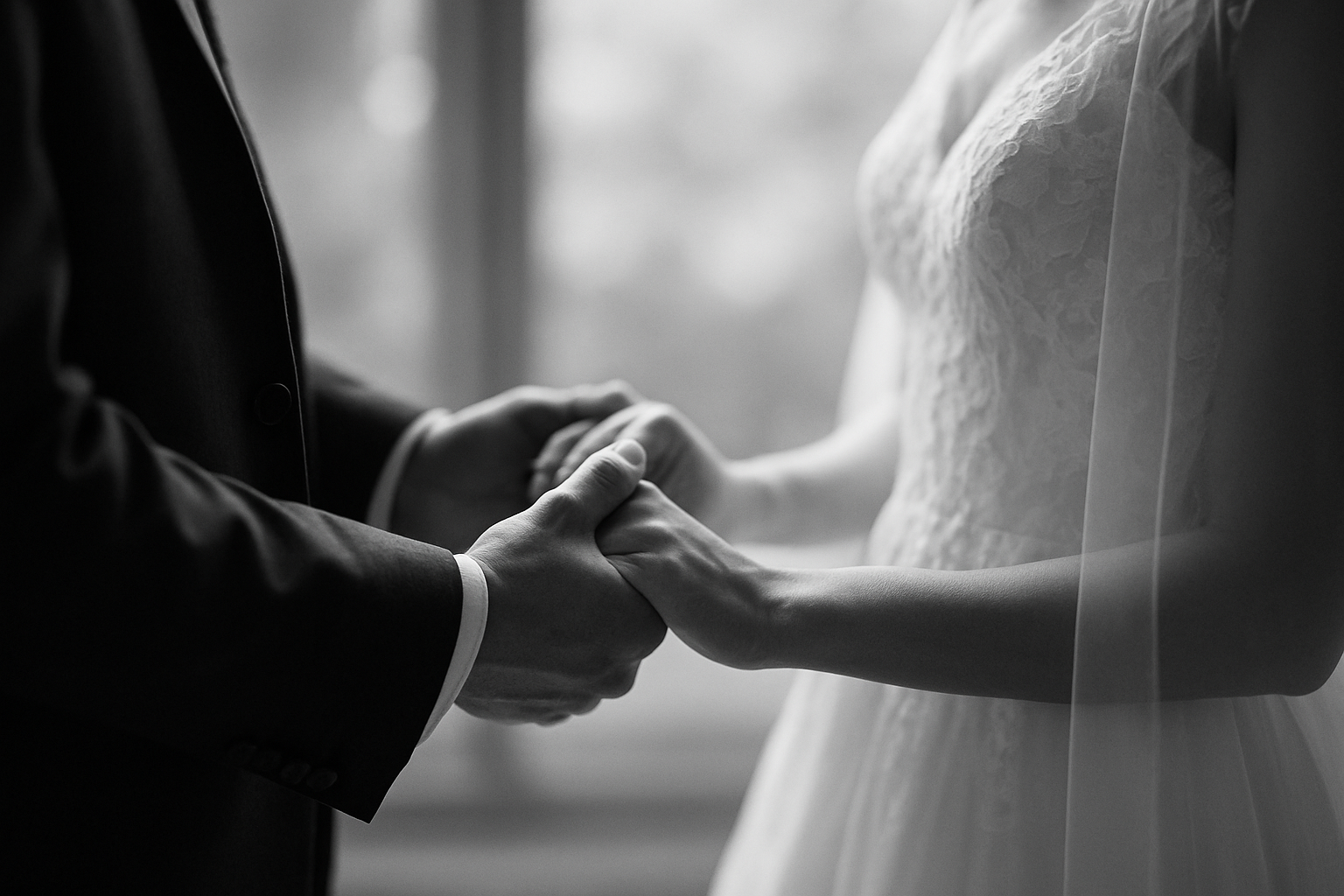
A candid wedding photo black and white moment captured during the ceremony.
Why Black and White Wedding Photography Still Captivates Couples
Couples often ask why black and white wedding photography has stuck around for over a century of shifting trends. Above all, the answer comes down to focus. Without color pulling attention toward a dress, a tablecloth, or a bouquet, viewers naturally look at faces, gestures, and expressions instead.
Furthermore, black and white images tend to feel more intimate. For instance, a quiet moment between newlyweds during a first look often reads as more emotional in monochrome, since nothing competes with the expression on their faces. Similarly, tears during vows or laughter during toasts often look more powerful once color is stripped away.
The Emotional Appeal of Monochrome Wedding Photos
Monochrome wedding photos also lend themselves well to printing. Consequently, many couples choose black and white prints for guest books, parent albums, or framed prints on display, since the format pairs well with almost any home decor style. In contrast, color photos sometimes clash with certain interiors, which is one reason monochrome remains a safe, elegant choice for framed keepsakes.
Best Wedding Moments to Capture in Monochrome
Not every moment needs a black and white treatment. Specifically, photographers tend to reserve the style for scenes with strong emotion, dramatic lighting, or busy backgrounds that color would otherwise distract from.
- The first look, when emotion is raw and unfiltered.
- Vows and ring exchanges, where facial expression tells the story.
- Getting-ready shots, especially candid, documentary-style frames.
- The final dance or exit, often shot with dramatic backlighting.
- Speeches and toasts, capturing genuine laughter or tears.
In addition, many couples ask photographers to include a handful of black and white wedding photos from the reception dance floor, since motion and energy often translate beautifully without color.
Black and White Wedding Photos vs. Color Wedding Photos
Deciding between black and white wedding photos and color images doesn’t have to be an either-or choice. Instead, most photographers deliver a mixed gallery, letting couples choose the best format for each moment.
Color photos generally work better for detail shots, such as floral arrangements, table settings, and dress details, since color is often the whole point of these images. Black and white, on the other hand, tends to suit portraits, candid reactions, and dramatic lighting situations. Therefore, a balanced gallery usually includes both, rather than committing entirely to one style.
According to The Knot’s wedding industry research, couples spend a significant portion of their overall budget on photography and video, which makes getting the most out of every shot, color or black and white, a worthwhile priority.
How to Get Stunning Black and White Wedding Photography
Getting a strong black and white result takes a bit of planning ahead of the wedding day. The following steps outline a simple process photographers and couples can follow together.
- Shoot in color first. Capture every photo in full color and convert selected images to black and white during editing, since this preserves maximum flexibility for adjusting contrast and tone later.
- Watch the light. Look for strong directional light and clear contrast between light and shadow, because flat, even lighting tends to make monochrome photos look dull and lifeless.
- Prioritize emotional moments. Focus black and white conversions on candid, emotional moments such as tears, laughter, or a first dance, since expression carries more weight than color in these frames.
- Simplify busy backgrounds. Choose backgrounds with clean lines or simple textures for black and white shots, because color no longer separates subject from background once it is removed.
- Add a photo booth for candid shots. Pair traditional wedding photography with a photo booth rental offering a monochrome filter, giving guests an easy way to create their own black and white keepsakes throughout the reception.
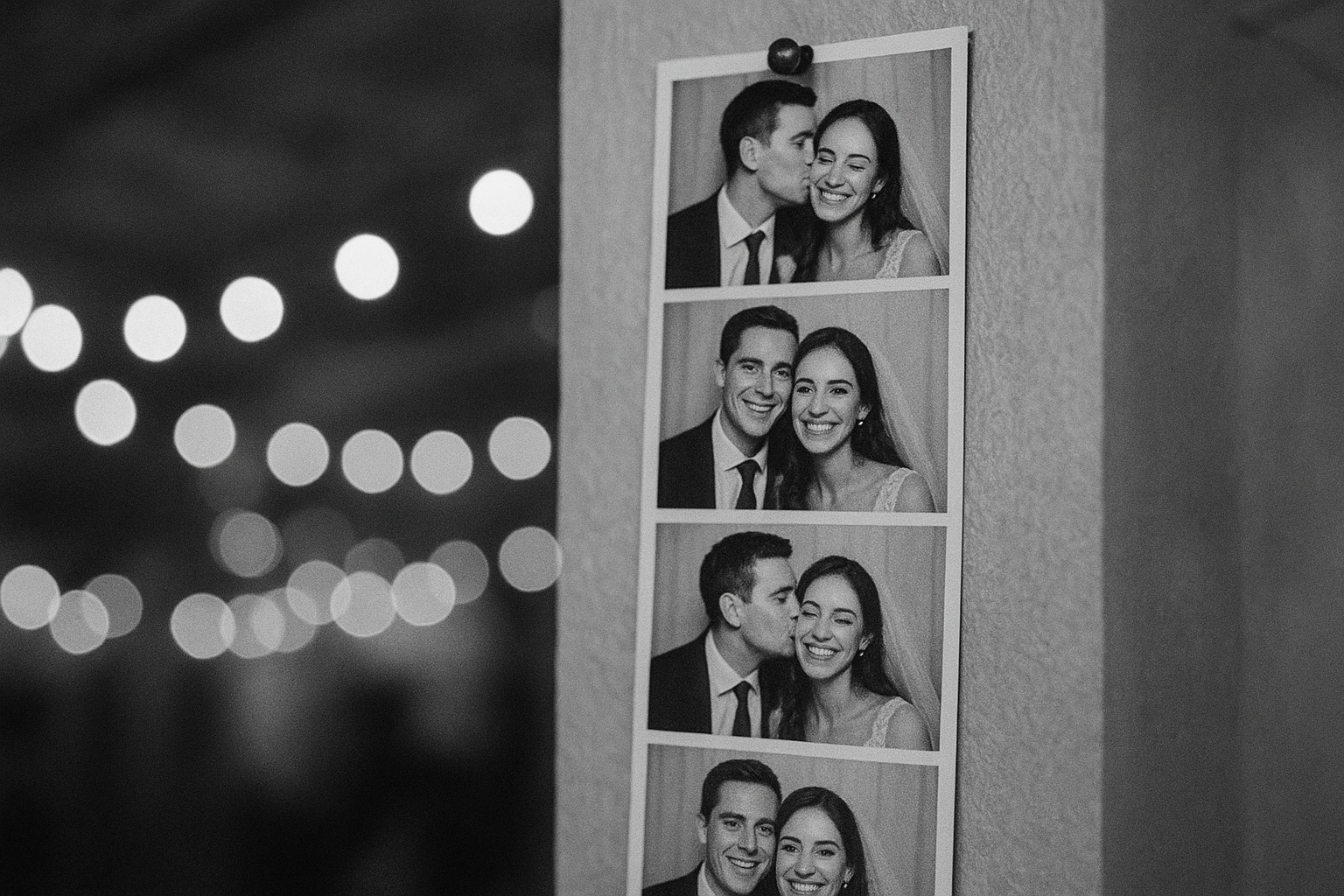
Photo booth strips add a candid, monochrome keepsake to any wedding reception; see our photo booth rental guide for local options and examples.
Black and White Photo Booth Ideas for Your Reception
Beyond the main photographer’s coverage, a photo booth rental gives guests their own way to create black and white wedding photos throughout the night. For example, a Digital Booth setup delivers unlimited digital captures during an 11am to 11pm window, complete with an online gallery guests can browse and download from afterward, which is a meaningful upgrade over a DIY backdrop where phone photos often go unshared.
Couples wanting physical keepsakes might prefer the Prints package instead, which produces same-night printed photos guests can take home. Meanwhile, budget-conscious couples often choose the self-serve Pick Up option, which is scheduled flexibly around the event date rather than a fixed return window. Add-ons like a Premium 8×8 Backdrop or Magic Green-Screen Backdrop pair especially well with a monochrome filter, since simple backgrounds photograph beautifully in black and white.
Couples researching options locally can browse examples of photo booth wedding favors or see how a wedding photo booth rental in Mt. Vernon, Indiana comes together for real events. Similarly, couples across the border can review a wedding photo booth rental in Mt. Vernon, Illinois for comparison, or check availability through PicsPhotoBooth.com directly.
Common Mistakes That Ruin Black and White Wedding Photography
Even skilled photographers can fall into a few predictable traps with monochrome editing. Overusing the effect is the most common mistake, since converting every single photo removes the sense of intention that makes black and white feel special in the first place.
Another frequent issue involves flat lighting. Because black and white relies on contrast, photos taken in harsh midday sun or dim, even light often look muddy once converted. Therefore, photographers should scout for directional light, shadows, and texture before deciding a scene is a good candidate for conversion.
Finally, some photographers skip color entirely during the shoot itself, using an in-camera monochrome mode. However, this limits editing flexibility later, since color data can’t be recovered once it’s discarded. Shooting in color and converting afterward remains the more reliable approach recommended by working professionals.
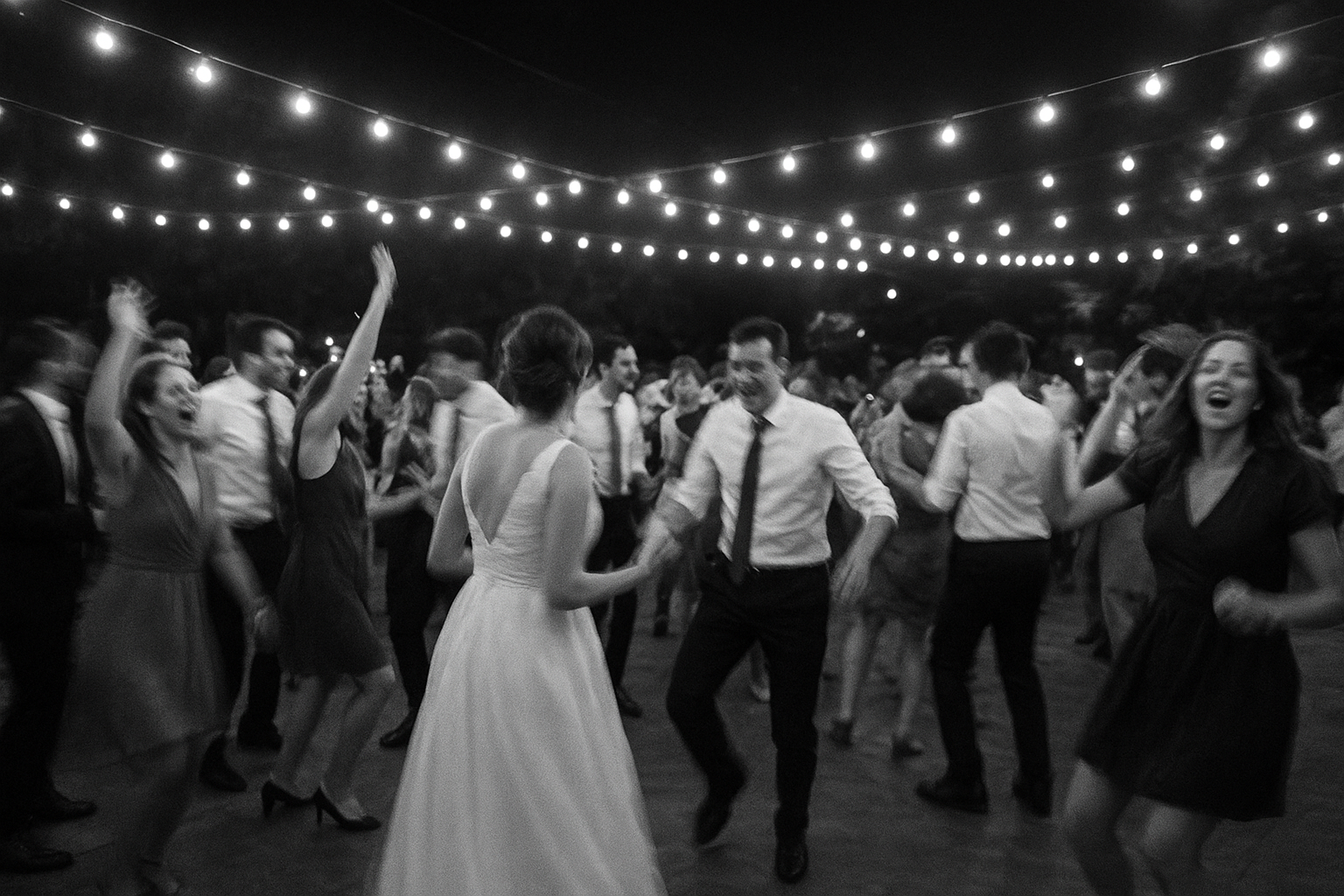
Reception dance floors often make some of the strongest black and white wedding photos.
Frequently Asked Questions About Black and White Wedding Photography
What is wedding photo black and white?
Wedding photo black and white is a monochrome editing style that removes color from wedding images, emphasizing light, shadow, and emotion. Photographers often provide it as an alternative version of key shots like the first kiss or father-daughter dance.
Why do wedding photographers shoot black and white photos?
Photographers use black and white to remove color distractions and highlight emotion, texture, and composition. It also gives photos a timeless quality that won’t look dated by trends in decor or clothing colors.
Does black and white editing cost extra with a wedding photographer?
Most full-service wedding photographers include black and white conversions in their standard editing package at no additional charge. However, some charge extra for fully custom monochrome retouching on every image rather than a select few.
When during the wedding day works best for black and white photos?
Emotional moments such as vows, first looks, speeches, and the last dance tend to work best in black and white. These moments rely on expression rather than color, so removing color often strengthens the impact.
Should I choose black and white or color photos for my wedding album?
Most couples choose a mix rather than picking only one style for their album. Color works well for details like flowers and decor, while black and white suits candid, emotional, or high-contrast shots.
How can a photo booth rental add black and white wedding photos to my event?
Many photo booths, including digital booth setups, offer a monochrome filter guests can select before printing or sharing their photo. This gives guests a fun, candid alternative to formal black and white portraits taken by the main photographer. Learn about photo booth features and add-ons to pick the right package.
What camera settings help create strong black and white wedding photography?
Photographers typically shoot in RAW format and convert to black and white afterward rather than using an in-camera monochrome mode. This preserves color data, which allows finer control over contrast and tone during editing.
What’s the biggest mistake couples make with black and white wedding photos?
The most common mistake is converting every single photo to black and white instead of selecting only the strongest, most emotional frames. Overusing the effect can make an album feel repetitive rather than intentional.
What’s the difference between black and white and sepia-toned wedding photos?
Black and white photos use pure grayscale tones, while sepia adds a warm brown tint associated with vintage photography. Couples going for a modern, editorial look usually prefer black and white over sepia.
Can guests use a photo booth to take their own black and white photos?
Yes, most digital photo booths let guests toggle a black and white filter directly on the touchscreen before capturing their photo. This gives guests a quick, self-serve way to create monochrome keepsakes without editing software.
How long does it take to edit a full set of black and white wedding photos?
Editing timelines vary, but most photographers deliver a fully edited gallery, including black and white selections, within four to six weeks. Rush editing is sometimes available for an added fee.
How many black and white photos should be in a wedding album?
There’s no fixed rule, but many photographers suggest converting 10 to 20 percent of final images. This keeps the black and white style special rather than diluting its emotional impact across the whole album.
Final Thoughts on Wedding Photo Black and White Style
In summary, wedding photo black and white remains a timeless choice because it strips away distraction and puts emotion front and center. Whether it’s a quiet first look, a tearful vow exchange, or a joyful dance floor moment, monochrome photography tends to age gracefully in ways trend-driven color palettes sometimes don’t. Add a short author byline and a "Last updated" date to improve trust and transparency.
Above all, the best results come from planning ahead: shoot in color, watch the light, and save the black and white treatment for moments that genuinely benefit from it. Pairing a skilled photographer with a photo booth rental, such as the packages offered through PicsPhotoBooth.com, gives couples and guests more chances to walk away with photos worth keeping. For further reading on the history of the technique, the Wikipedia entry on wedding photography offers useful background alongside industry resources like the Professional Photographers of America. Couples exploring rentals nearby can also see examples through Boonville photo booth rental or additional photo booth wedding favor ideas before booking.